

Why choosing the right tile matters for Edmonton homes
Climate, humidity, and heavy foot traffic can impact tile performance in Edmonton. Therefore, choosing the right ceramic or porcelain tile is important. This choice helps ensure lasting beauty and durability in local homes.
In this guide, you will learn about tile strength and water absorption. You will compare maintenance needs and choose the best tile for kitchens, bathrooms, and entryways in Edmonton.
YEG Tile Tree offers local expertise and service to help you make decisions. We provide knowledgeable support and installation in the Edmonton area.
Ceramic vs. Porcelain: The Basics
Definitions:
Ceramic is a material made from clay, fired at lower temperatures. This makes it less dense and more porous.
Porcelain is a type of ceramic made from fine clay, often including kaolin. They fire it at high temperatures. This process makes it denser and less porous, giving it a harder surface.
How they differ in appearance, feel, and performance:
Porcelain usually looks more even and has a sharper edge after cutting. It also has a smooth, glass-like surface when glazed. Ceramic tiles often show more variation in colour and texture and can feel slightly warmer or more textured to the touch.
Porcelain performs well because it resists moisture and stains. It has low water absorption and high density. This makes it a good choice for busy areas and places with high humidity.
Ceramic is easier to cut and install. It can be a cost-effective choice for dry, indoor use where extreme conditions are not a problem.

Common misconceptions:
Many people think that all porcelain is of better quality than ceramic. However, this is not always true.
The quality depends on the tile’s body, glaze, and the way you install it. Another misconception is that porcelain is always white or looks the same. In fact, porcelain comes in many colours and finishes.
Many people think ceramic is less durable or more likely to crack. This is not always true. Proper installation, the base it sits on, and how users use it are just as important as the material.
Many people believe that you can only use porcelain tiles on floors. However, you can also use porcelain on walls and countertops when you choose it correctly.
Key Differences
Porcelain usually absorbs minimal water, often 0.5% or less. This makes it more water-resistant than most ceramic tiles, which tend to absorb more moisture.
Both tile types use PEI ratings to measure surface wear. They also follow ISO standards for manufacturing and performance. Higher PEI numbers mean better abrasion resistance for busy spaces in Edmonton.
Strength and durability
Porcelain surpasses many ceramic tiles in strength and durability. Its thicker and heavier design makes it more resistant to impact. This feature is perfect for busy areas or strong flooring in Edmonton.
Frost resistance and Edmonton-specific considerations
Frost resistance and Edmonton-specific considerations are central to outdoor and entrance installations. Porcelain has low porosity, which means it resists frost well. This helps reduce freeze-thaw damage.
You can use glazed ceramic outdoors, but only if you choose a frost-resistant type and install it correctly. In Edmonton, this often means choosing porcelain for outdoor walkways, steps, and entryways. Planning for the right base, sealing, and expansion joints is also important.

Size range and design flexibility
Porcelain is well known for larger formats and rectified edges, offering expansive, seamless looks that suit contemporary Edmonton architecture. Ceramic tiles come in many designs. They offer affordable patterns and textures. This makes them great for feature walls, backsplashes, or budget-friendly projects.
Price Ranges and Value.
Porcelain tiles tend to be pricier because of their composition and manufacturing process. Nonetheless, they offer exceptional durability and require minimal upkeep. This can provide better long-term value in Edmonton’s tough weather and busy areas.
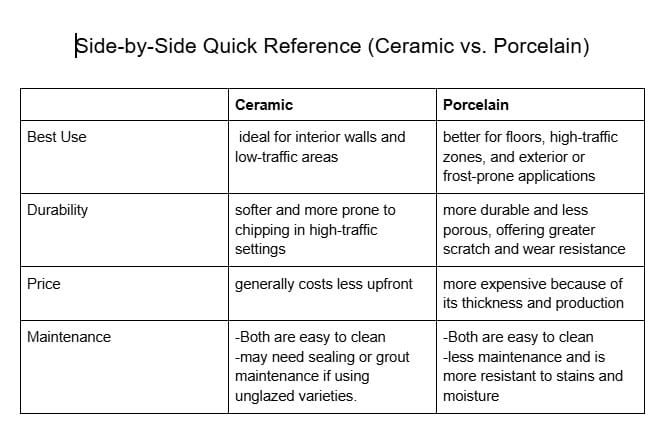
Ceramic tiles can be a great choice for indoor walls, bathrooms, and low-traffic areas. They are good when design options or budget favour ceramic.
YEG Tile Tree suggests using porcelain for outdoor and high-traffic areas in Edmonton. For indoor spaces, ceramic is a strong and cost-effective choice. This advice relies on PEI/ISO ratings, water absorption data, and installation needs for the local climate.

Ceramic: Pros and Cons
For backsplashes and walls, ceramic tile is often the best choice. It offers many design options at a low cost. You can create bold patterns and textures without spending too much money.
Porcelain is good for backsplashes and walls. It gives a strong, uniform look and resists moisture well, although it is more expensive.
Pros:
- lower cost
- easier installation
- wider range of designs and finishes
- popular choice for budget-friendly projects.
Cons:
- Ceramic generally has lower strength
- more prone to chipping in high-traffic areas or with heavy impact

Porcelain: Pros and Cons
Porcelain is a dense, low-porosity tile ideal for spaces that demand durability and long wear. The best places to use porcelain floors are high-traffic areas. This encompasses doorways, kitchens, and lounges.
Porcelain’s durability makes it scratch and wear-resistant. Ideal for bathrooms, it effectively resists moisture absorption.
For outdoor use, porcelain can work well in Edmonton’s climate. Use frost-resistant porcelain slabs or pavers. Proper installation is important. Remember that freeze-thaw cycles and substrate details are key for lasting results.
Pros:
- easy installation
- available in a broad range of tile formats, including larger slabs.
- Higher durability and lower porosity
- long-term resilience in high-use spaces, reducing maintenance needs over time.
Cons:
- Higher cost and tougher installation.
- denser and heavier
- often requiring specialized cutting and setting techniques,
- needs premium setting materials
- require meticulous substrate preparation.
- might require hiring skilled installers to guarantee correct adhesion, levelness, and longevity, particularly for extensive projects or outdoor uses in Edmonton’s weather conditions.

Performance Factors to Consider
Porcelain tiles are denser and absorb less water. This means they have a lower risk of grout staining. They also perform better in wet areas.
In contrast, ceramic tiles are more porous. They may need more frequent cleaning or sealing to avoid stains.
Slip resistance (R-values) and suitable finishes for bathrooms/kitchens
When selecting tiles for kitchens and bathrooms, consider the slip-resistance ratings (R-values). Choose textures or finishes that provide better grip in wet areas. Porcelain usually has more slip-resistant finishes for floors. Ceramic can also be safe if it has a non-slip texture.
Frost/temperature considerations for Edmonton basements and outdoor spaces
In Edmonton’s climate, porcelain is a better choice for outdoor use or basements. It has lower porosity and greater durability. These features help it handle temperature changes and moisture. However, frost-resistant installation methods and good substrate preparation are important for both tile types.
Maintenance needs (stain resistance, sealing requirements)
Porcelain usually needs less maintenance because it is dense and resists stains. Ceramic may need sealing and more careful grout care. This depends on the glaze and body composition. Always follow the manufacturer’s advice for sealing and cleaning to make it last longer.
Aesthetic and Design Considerations
Ceramic tiles usually have more glaze variation and warmer, softer colours. Porcelain tiles often have more consistent colours. This happens because manufacturers make them from denser clays and fire them at higher temperatures.
Glaze finishes on ceramics can be glossy or matte. They may also have more noticeable surface textures. In contrast, porcelain usually has more uniform matte finishes and subtle textures.
Ceramics often have more noticeable surface features from the glaze. In contrast, porcelain can look like natural stone or concrete and feels smoother.
Porcelain usually looks cleaner and lasts longer. In contrast, ceramic can give a warmer, more handmade feel in Edmonton-inspired designs.

Tile formats and patterns
Smaller spaces look better with lighter, larger porcelain or ceramic tiles. These tiles feature minimal grout lines, creating a more spacious room feel. Small tiles, like 2×2 or 3×6 inches, can create interesting patterns in tight areas.
In expansive areas, large-format tiles (12×24 inches and above) minimize visual interruptions. They offer a seamless, spacious appearance, particularly in modern Edmonton residences.
Herringbone, chevron, and encaustic patterns are great for foyers or kitchens. They add character to these spaces.
Basic stacked or subway arrangements work well in large spaces. They provide a classic and unified look for open-concept layouts.
How to achieve cohesive Edmonton-inspired looks
To evoke a warm Edmonton ambiance, opt for ceramic or porcelain planks with matte finishes and wood-inspired textures. Balance these with neutral grains and natural wood in cabinets and furniture.
Subway tiles offer flexibility in style. Opt for traditional white or gentle colored glazes for walls or kitchen backsplashes. Then, add a contrasting grout colour to highlight the lines and add urban style.
Encaustic patterns can add Edmonton’s historic charm to kitchens or entryways. They use bold, earthy colours and detailed designs to create focal points.
Finish the ensemble with accessories in brass or matte black. Select a palette featuring creams, taupes, and cozy browns. This choice will unify ceramic or porcelain features on floors, walls, and decorative accents.


Installation Tips and Best Practices
YEG Tile Tree gives helpful installation tips and best practices. Start by preparing a solid substrate. Choose the right underlayment. Acclimate the tiles carefully to avoid bowing, cracking, or adhesive problems.
Substrate prep, underlayment, and acclimation
For both ceramic and porcelain, make sure the surface is clean, dry, flat, and strong. Choose the right underlayment for the room’s conditions and expected movement. Let the tiles and thinset adjust to the environment before you install them.
The adjustment period should be a minimum of 48 hours. Keep the temperature and humidity levels controlled. This helps reduce bond failures after grouting.
Thinset selection and grout choices
When choosing thinset, pick a polymer-modified cement mortar for porcelain or ceramic tiles. For high-traffic areas or wet zones, consider using epoxy grout. Think about how easy it is to maintain compared to the cost and workability. Align the grout hue with the tile tones to achieve the desired appearance and joint functionality.
For porcelain, which is denser and less forgiving, use a strong thinset. If the manufacturer requires it, add a latex additive. For ceramic, a standard modified thinset usually works well. Make sure to use the right trowel size and technique for good coverage and bond.


Cutting, shaping, and edge finishing for porcelain vs. ceramic
Cutting, shaping, and finishing edges are different for porcelain and ceramic. Porcelain needs diamond-tipped tools and slower speeds to avoid chipping.
Ceramic is easier to work with but still needs fresh cuts and protected edges. Both materials should have bevelled or finished edges as the design requires. Using the right edge profiles can help reduce chipping in busy areas or showers.
Careful planning of grinding, polishing, and edge finishing ensures grout lines remain uniform and seams stay tidy. Use tools like straight edges and spacers to ensure joints are straight.
Avoid common installation issues
For tile longevity, focus on proper substrate preparation, consistent room temperature, correct adhesive/grout choice, and sealing porous materials. Avoid rushing large-format porcelain without flat substrates and lippage control. Always follow the manufacturer’s installation standards to prevent common problems.
Cost and Value in the Edmonton Market
In the Edmonton market, ceramic tiles usually cost less than porcelain tiles. Ceramic tile materials range from about $2 to $6 per square foot. The cost of installation ranges from $5 to $12 per square foot. These prices depend on size, pattern, and contractor.
Porcelain tiles usually cost more. The cost of materials typically falls between $4 and $8 per square foot. Fully installed prices usually range from $8 to $18 per square foot. This results from their greater density, heavier weight, and intricate installation procedure.
Long-term cost considerations
Long-term cost considerations follow durability, maintenance, and replacement needs. Porcelain is hard and less porous.
This enhances its resistance to chipping and moisture. Ideal for busy areas and bathrooms, porcelain minimizes long-term costs associated with replacement and maintenance.
Ceramic tiles can chip or wear out in busy areas. It usually costs less to buy and is easier to cut and install for DIY projects. Maintenance is simple, but you may need to replace it sooner in high-use spaces.
Both options need good substrate preparation and sealing when needed. Professional installation can help reduce future repairs and water damage.

Budget-friendly planning tips and where to invest.
Here are some cost-effective strategies for investment planning. Put more of your budget into high-traffic areas or wet areas. These places need durable flooring.
Porcelain is perfect for kitchens, entryways, and bathrooms as it is best suited for high-traffic areas. Ceramic is suitable for walls, backsplashes, or areas with minimal foot traffic. This approach offers excellent value while maintaining aesthetic appeal.
Investigate sales, factory-direct offers, and bulk purchase discounts. Also, consider long-term costs like sealing, maintenance products, and possible replacement cycles.
Choose sizes that minimize cuts and waste. Reserve premium patterns or textures for accent areas, not entire rooms.

Maintenance and Longevity
For cleaning, apply a gentle, pH-neutral cleanser with warm water. Use a soft cloth or sponge for daily cleaning.
Utilize gentle, non-abrasive pads exclusively for stubborn areas. Porcelain is usually better at resisting stains and scratches. However, both surfaces need gentle, regular cleaning to keep their finish. Avoid acidic, alkaline, or harsh chemical cleaners that can dull glaze or grout over time.
Grout maintenance and sealing
After installing grout, apply a sealant. Reapply the sealant as the installer suggests. This is usually every 1 to 2 years; the timing depends on how much traffic and use the area gets.
Clean grout using a pH-neutral cleaner and a soft brush. This helps prevent buildup.
Avoid using chlorine bleach or strong acidic products. These can weaken the grout seal. Consider grout colour matching or epoxy grout for added stain resistance in high-traffic areas.
Stain and chip prevention
Place mats at entryways and clean up spills quickly. This helps lower the risk of stains, especially on light grouts and ceramic surfaces. Put protective pads under heavy furniture. Avoid dragging items on tiled floors to reduce chips.
Fix small chips early with colour-matched epoxy. For bigger damage, consult a professional. Regularly inspect edges and transitions and reseal grout as needed to maintain a clean, long-lasting finish.

Local Considerations for Edmonton Homes
Edmonton has a unique climate. It has issues with moisture in basements and significant fluctuations in temperature. This climate is important when choosing between ceramic and porcelain tile. In basements and below-grade areas, it is crucial to resist moisture and seal properly.
Outdoor transitions and entryways must handle freeze-thaw cycles and significant temperature fluctuations. Porcelain tiles are denser and less porous. They often work better in wet areas and places with temperature changes. However, proper installation and waterproofing are still important for both types of tiles.
Local supplier and installer tips
Choose tiles that have good slip resistance for entryways and bathrooms. Check that grout and sealing products work well with Edmonton’s humidity. Plan installations to reduce disruption during the cold seasons.
YEG Tile Tree focuses on careful surface preparation and precise tile setting. They also control the temperature during colder months. This keeps the tiles strong and ensures they last a long time.
They also suggest asking for samples that show real Edmonton lighting and foot traffic. This helps to see how colour and texture change over time.
Warranty and after-sales support expectations
The warranty and post-purchase support must encompass installation quality, tile issues, and grout durability. Your tile installer will define explicit guidelines for coverage in basements and high-moisture areas.
Ask about maintenance recommendations, recommended sealants for different tile types, and response timelines for service calls after installation.
YEG Tile Tree typically provides a defined warranty period. They provide details on coverage limits and support after installation. This helps homeowners with any issues that come up as the seasons change in Edmonton.
Buying Guide
Navigate choices with clear questions and practical steps. When shopping for tiles, ask about porosity and how the tile behaves in different conditions. Additionally, remember to assess the tile’s finish and its slip resistance properties. This will help you find tiles that fit your space, climate, and traffic needs.
For sample size recommendations, ask for several full-size or nearly full-size samples. Obtain samples in your desired colour and the finish you intend to apply. Compare them under lighting that is similar to your space.
Plan the colour and pattern by laying out several tiles or large sample sheets. This helps you see the grout colour, vein direction, and pattern across walls, floors, and transitions. Remember that changes in light will affect how everything looks.
Prior to purchasing, consult the retailer with a tile sample. Make sure the product’s moisture performance fits your installation area.
Confirm the warranty details. Get written specifications for porosity, slip resistance, and warranty coverage. This will help you avoid surprises after installation.
FAQs
Is porcelain always better for floors?
- Porcelain is usually denser and more durable than ceramic. This makes it a good choice for floors in busy areas and places with moisture. Ceramic tiles are a suitable option for flooring in low-traffic areas. This is true if you rate it for floor use and install it correctly.
Do ceramic tiles chip easily?
- Ceramic tiles can chip if someone hits them hard or installs them incorrectly. However, high-quality ceramic tiles with good glazing usually resist everyday use. Porcelain generally exhibits greater impact resistance because of its denser structure.
Can porcelain be used on walls?
- Yes, porcelain is excellent for walls as well as floors. Its low water absorption and strength make it a popular choice for shower enclosures, backsplashes, and other
vertical surfaces.
Do I need to seal porcelain or ceramic tiles?
- Most modern porcelain and ceramic tiles do not require sealing. Some unglazed or textured surfaces may need sealing. This keeps their colour and reduces stains. This is especially true for high-porosity products or floors in wet areas.
Which is more heat-resistant for kitchens?
- People know porcelain for its great heat resistance and low porosity. This is why it’s a favoured option for kitchen surfaces. These areas often deal with temperature changes and spills. Ceramic can also perform well when someone rates it for the intended use and installs it correctly.

Final Thoughts
In summary, choosing between ceramic and porcelain depends on your budget and needs. It also depends on the space you are tiling.
In most everyday places in Edmonton, ceramic tiles are a good choice for walls and light-use areas. Porcelain tiles are ideal for high-traffic floors and areas prone to moisture. Understanding grade, finish, and installation considerations helps ensure a long-lasting result.
How YEG Tile Tree can help
YEG Tile Tree helps you select the ideal tile type and quality for your specific area. They can take accurate measurements and offer expert installation advice. This ensures a strong and attractive result.
They provide product suggestions that match your design style and climate needs. They also offer detailed measurement services to reduce waste. Their installation planning includes substrate preparation, layout, and grouting options.
Schedule a consultation
Arrange a consultation with YEG Tile Tree to discuss your project. You can see tile samples, compare porcelain and ceramic options, and get advice for your Edmonton home.
