

Upgrading a basement bathroom.
The challenge of a dim, basement bathroom is real, with limited natural light, concrete walls, and a small footprint. These factors can make the space feel closed in and small.
When you choose the right layout, tile and lighting, the transformation is dramatic. The space becomes brighter, more inviting, and it can feel bigger and more polished, all while being functional.
Why basement bathrooms tend to feel dark
Basement bathrooms in Edmonton often feel dark due to limited natural light, low ceilings, and damp air. This can reduce colour and warmth. Dim lighting and a low ceiling can trap shadows, making a basement room feel claustrophobic and small.
Local experts can help homeowners solve these issues. They can choose tiles and finishes that reflect light. They also improve moisture resistance and make spaces feel airy.
limited natural light, low ceilings, damp environments.
Small or high windows, moisture issues, and an awkward layout can make the space feel prison-like. Limited natural light makes rooms feel darker. Low ceilings reduce the sense of height. Damp conditions can damage tiles and promote mould.
Reflective Surfaces and Grout Colour
Choosing bright, light-reflective tiles can boost mood and make the space feel larger.
Paler grout lines conceal joints better and allow the eye to glide smoothly across the room. Use moisture-friendly, light-reflective tiles and finishes.
Reflective surfaces, like glossy or high-wear porcelain tiles in larger sizes, reflect light. They spread artificial light and daylight around the room, giving it a more open feel.
How Tile Choices Impact Brightness and Mood.
Tile choices can dramatically impact brightness and mood. Light, glossy, or satin ceramic and porcelain tiles reflect more light. Large-format tiles reduce grout lines. They create a seamless look that opens the space.
Light neutrals like ivory, soft gray, and pale taupe can brighten walls and floors, while cool whites with a warm hint can feel fresh, not sterile.
Matte wall finishes paired with glossy or polished floor tiles can balance glare and add depth. Reflective accent tiles or a glass mosaic splash can create focal points.

Why tile is the ideal Material for Basement Spaces
Tile works well in below-grade spaces. It stays cool and durable in damp areas. It also creates a smooth surface that helps block water. Tile is easy to clean after daily use.
Water resistance and durability for bathrooms.
For Edmonton basements, porcelain and ceramic tiles offer great water resistance and strong wear resistance. Their colour lasts and holds up in humid air and changing temperatures.
With many textures, sizes, and finishes, tile reflects light and brightens small, dark basements. It also keeps the bathroom practical and easy to maintain.
Choosing tile from a local specialist like YEG Tile Tree helps ensure a professional install. It also provides reliable moisture barriers and durable surfaces for basement bathroom challenges.

Light-reflective properties of light-coloured or glossy tiles.
Having light, reflective, or glossy tiles helps maximize daylight, making small basement rooms feel more open and airy. This helps even when windows are limited.
The reflective surfaces bounce light around the space. This reduces the need for extra artificial lighting. It also creates a brighter, more welcoming atmosphere.
Maintenance considerations with basements
When considering maintenance, tile is relatively low-maintenance. Cleaning with mild cleaners regularly and a simple grout refresh every few years keeps surfaces looking new. Additionally, sealed grout can also help reduce staining in high-traffic bathroom areas.
Long-term compatibility improves when you choose floor tiles with proper slip resistance. Install waterproof or water-resistant backings and membranes behind walls and floors. This helps prevent moisture migration.
With the right underlayment, sealing, and expert installation, basement bathrooms can stay attractive and strong for years.
Design trends for bright basement bathrooms
Whites, creams, cool grays, soft pastels.
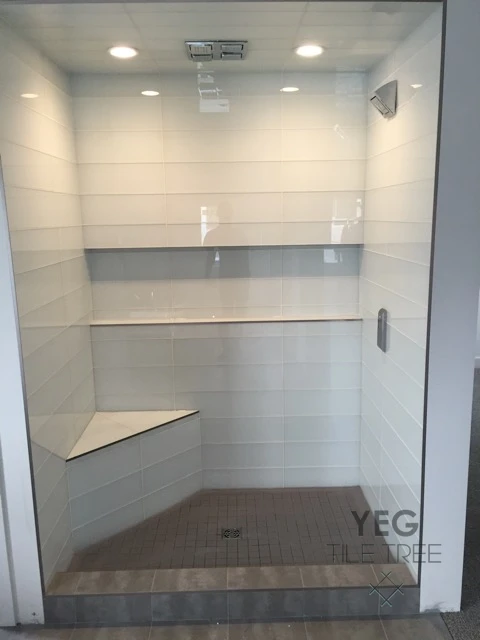
To counteract the darkness of below-grade spaces, pair bright tile with ample lighting. Examples of this include recessed lights, wall sconces, and even skylights or light tubes when possible. Choose white and cream neutrals to cool gray and pastel accents to create a modern and cohesive look while brightening up the basement space.
Large-format tiles to reduce grout lines
Large-format tiles are popular because they reduce grout lines and create a clean, seamless look. It can make small basement baths seem larger. Porcelain and glazed ceramic tiles offer durability, moisture resistance, and easy maintenance, making them ideal for damp basements.
Glass mosaics or glossy subway tiles as accent features
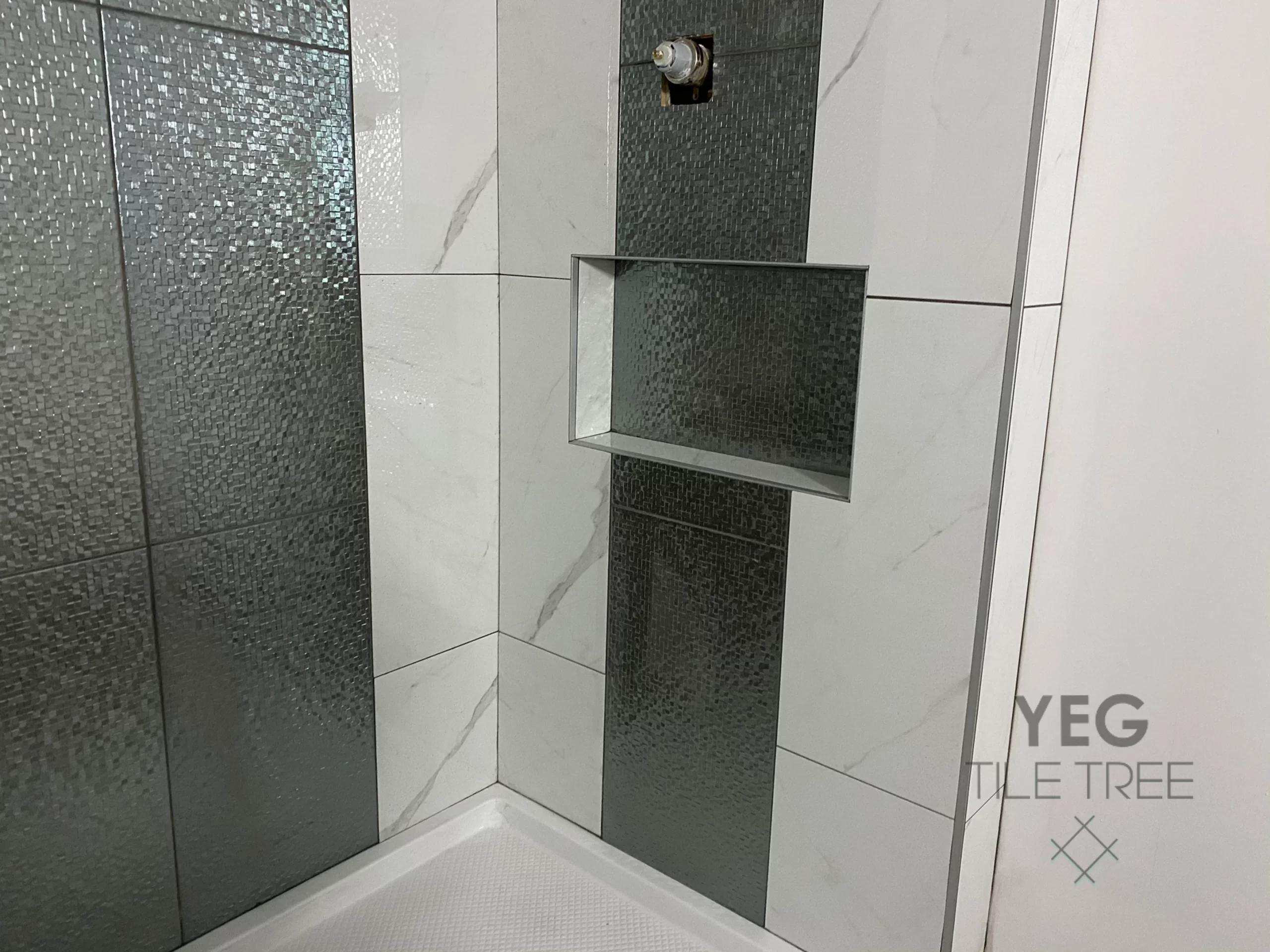
To make small spaces look deeper and brighter, use glass mosaic tiles or glossy subway tiles as accents. These finishes act like mirrors and bounce light around the room, making it seem brighter and bigger.
With the right combination of tile and accents in the space, you can achieve a spa-like feel or something modern and timeless. Whether you choose to use mosaics or subway tiles, your space will feel like the most inviting room in your home.
Matte vs. gloss finishes and where they work best
Creating a balance between matte and glossy finishes is part of the process in creating the perfect basement space. Both choices have their own aesthetic and function in a basement.
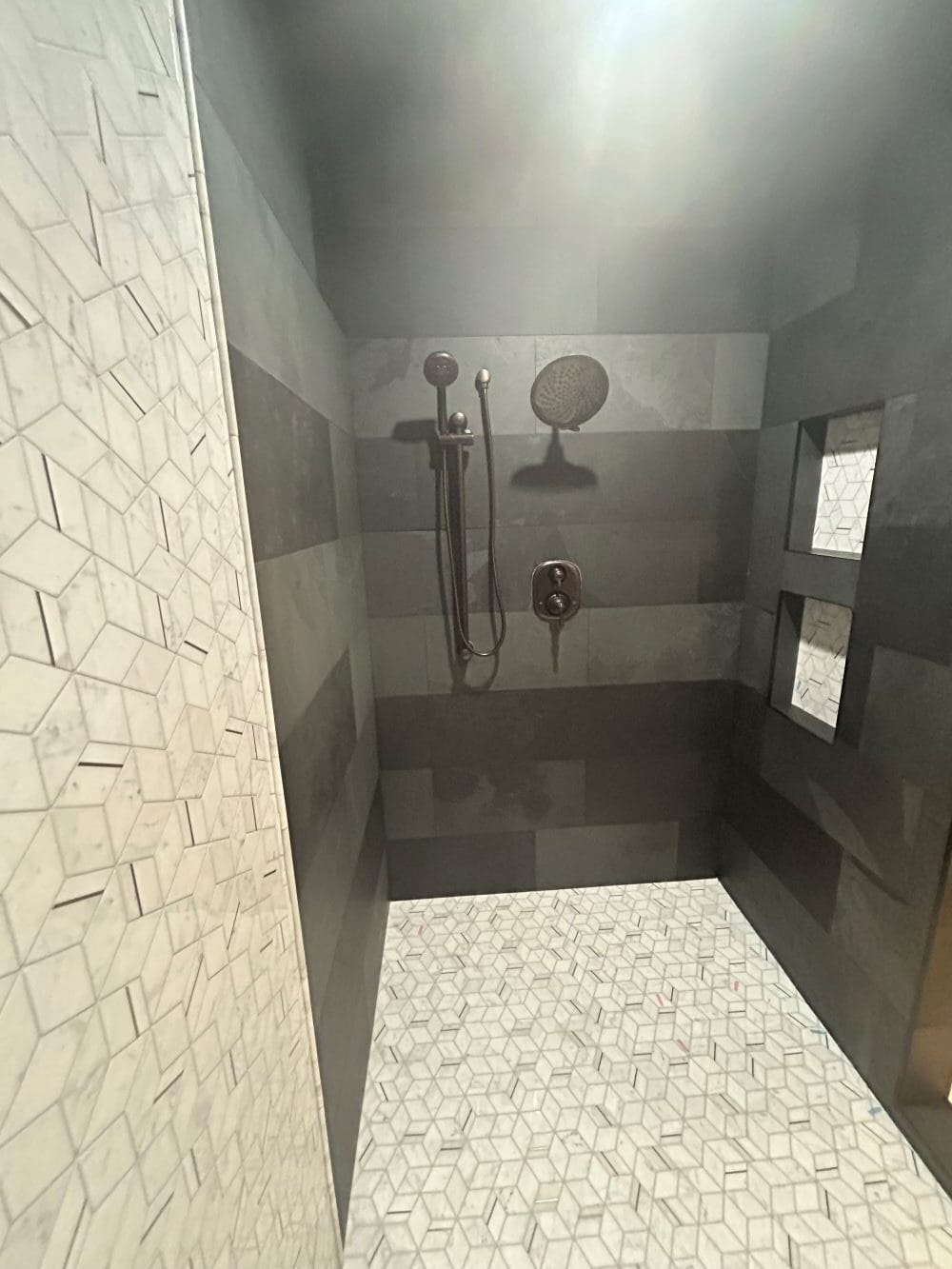
Matte finishes on the floor create a safer and lower-maintenance foundation for the bathroom. Water spots and dust are less noticeable on glossy tile surfaces. This can make your space look and feel cleaner. Matte finishes also offer better slip resistance, which can make it safer.
Glossy tiles are perfect for accents and creating a brighter space. Glossy finishes have a reflective surface that bounces light around the room.
This helps the space feel bigger and more refined. High-shine tiles work beautifully as an accent on shower walls or recessed niches and even as a decorative accent.
Lighter Grout With Stain Resistance Lasts Longer
For an Edmonton basement bathroom renovation, grout choice is as important as tile. It keeps the space bright and easy to maintain for years.
To keep a below-grade bathroom feeling fresh and open, YEG Tile Tree recommends opting for lighter grout shades. Examples include warm whites, soft ivories, or light greiges. These colours reduce the visible “grid” effect. They help tiled surfaces look like one continuous, light-reflecting expanse.
People used to steer clear of classic light-coloured grout in basements because of staining and moisture worries. Today, advanced high-performance grout products have transformed the situation. Advanced epoxy or specialized polymer-modified grouts are now virtually non-porous and highly stain-resistant.
By choosing durable, light-coloured grout, you can capture the fresh, open feel of a luxury spa in your Edmonton basement.

Edmonton-focused considerations
Local moisture control tips specific to Edmonton basements
Effective moisture control is essential for a lasting basement renovation in our local climate. Because basement concrete is naturally porous, a waterproofing system is essential for showers and floors alike.
We also recommend local moisture-mitigation strategies, such as installing in-floor heating cables. They provide comfort during a -30°C cold snap and also keep the subfloor dry. This discourages mildew growth during humid summers.
By dealing with Edmonton-specific building and environmental issues during preparation, you can keep your bright, modern basement strong. It can also stay mould-free for decades.
Premium Flooring Options
YEG Tile Tree’s expert installation team offers many premium options, including ceramic, porcelain, and glass mosaics. We also install natural stone tiles like marble, granite, and slate.
To protect your Edmonton basement from moisture, YEG Tile Tree installs the Schluter® DITRA-HEAT electric floor warming system.
Whether you want modern Italian porcelain or custom stonework, we work closely with you. We help source the right materials that match your style goals and budget. By pairing these top brands with our careful craftsmanship, we help you create a stylish, winter-ready retreat. It adds lasting value to your home.

Weather-related project scheduling and showroom benefits
When planning a basement bathroom renovation in Edmonton, project timing with the local climate can affect logistics and results.
Scheduling major tile installations during the shoulder seasons, like late spring or early autumn, for best results. Cooler seasons help avoid problems when moving temperature-sensitive thin-sets and grouts in extreme cold or heat.
Since many high-performance adhesives should not freeze during transit or storage, plan your “below-grade” project in milder months. This helps protect the strength of your waterproofing and bonding layers.
During Alberta’s unpredictable winter, homeowners can use Edmonton’s local tile showrooms to make selection easier. They can view and experience porcelain, stone, and glass textures firsthand in person.
Visiting a showroom lets you see full-size displays of in-floor heating systems. Clients can also view large-format tiles under professional lighting. This is crucial for judging how a “brightening” tile will look in a windowless basement.
By planning your project timeline around these weather conditions, you can make installation go smoothly. Use local design resources to help.

Tile options for basement bathrooms
Porcelain and ceramic tiles
Porcelain and ceramic tiles are popular choices. They offer strong surfaces that handle daily use well and are less likely to stain or warp in basements. Select the ideal porcelain or ceramic tile size and surface finish. Choose the most suitable underlayment to bounce back more light.
Porcelain tiles are durable and dense. They work well on floors and walls with moisture and temperature changes.
Ceramic tiles are a versatile, cost-effective choice. They come in many colours, patterns, and textures for any design. Additionally, they offer reliable water resistance when properly installed and grouted.
Large-format tiles to minimize joints
For a crisp, contemporary style, opt for oversized format tiles. They reduce grout joints, making small basements feel open and easier to clean.
Our large-format options reduce joints, create clean lines, and make spaces feel larger. They also provide strong slip resistance and durability for humid basement environments.

Light-coloured options to brighten the space
Light-coloured options to brighten the space:
White subway tile:
- Pros: Timeless, visually enlarges the room
- Cons: Grout staining can require more maintenance.
Light gray or pale beige porcelain/ceramic planks:
- Pros: modern, consistent colour, easy to clean
- Cons: lighter tones can show mineral deposits or soap scum if not cleaned regularly.
Marble-look porcelain or ceramic:
- Pros: elegant, spacious feel without real marble maintenance
- Cons: more expensive and can still show watermarks if not sealed and cleaned.
Cream or ivory mosaic tiles (glass or ceramic):
- Pros: adds texture and bounce of light, good slip resistance in some blends
- Cons: Perimeter grout lines may require more maintenance to prevent staining.
Accent possibilities
The right tile can brighten and elevate basement spaces, transforming dim spaces into welcoming, spa-like retreats.
When choosing tile for basement bathrooms, use moisture-resistant porcelain or ceramic tile in lighter colours. Choose large-format tiles to reduce grout lines. Pick matte or satin finishes to resist water stains.
Accent options can elevate the look. Use glass tiles for a subtle, reflective glow or stone-look porcelain for a natural, durable feel. Add decorative trims for character without overwhelming the space.
Combined, these selections make the bathroom feel brighter and more spacious. It resists basement humidity and still offers style and practicality.

Layout and pattern ideas
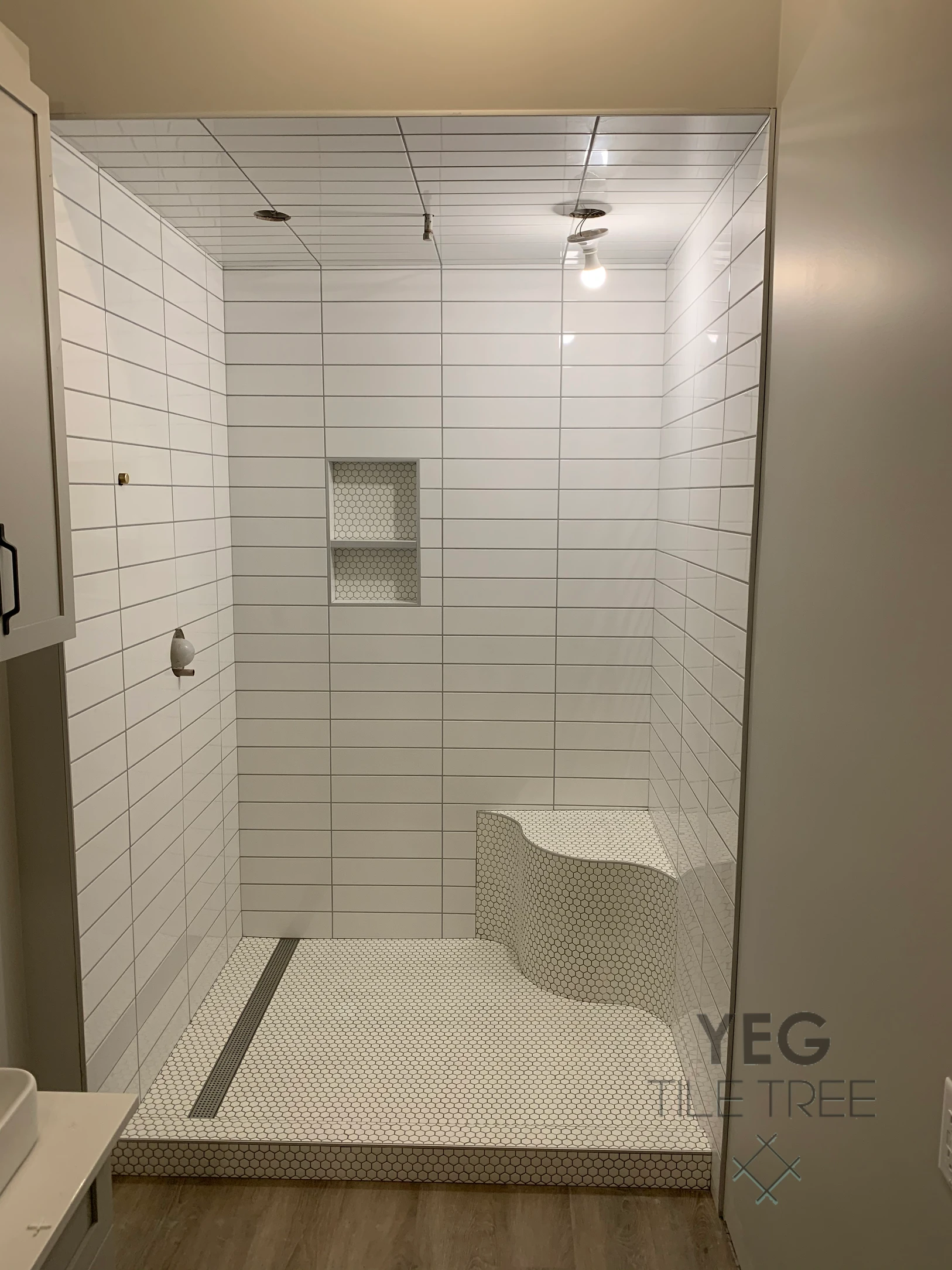
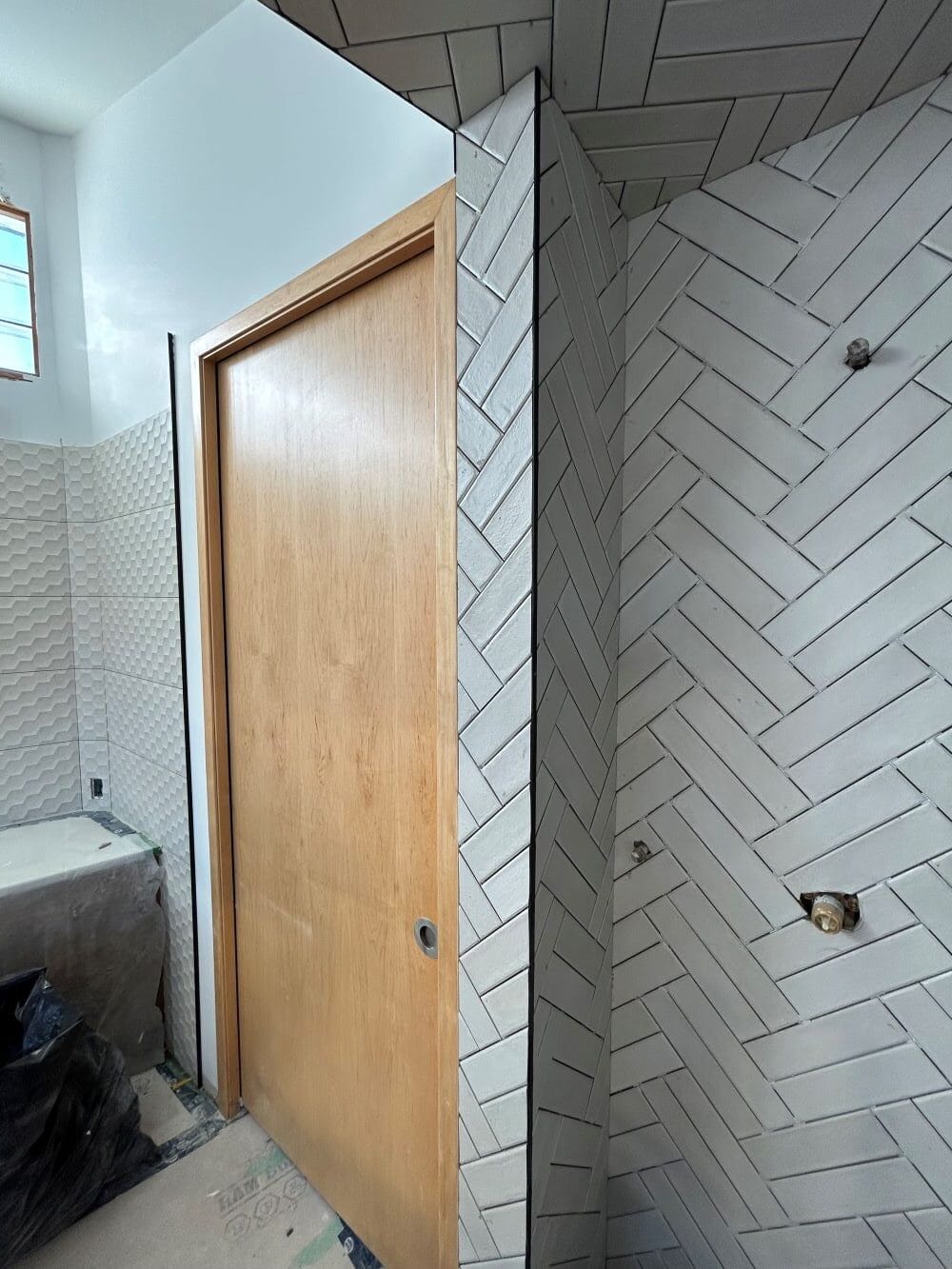
Layout and pattern ideas include classic subway tile in a brick pattern for a timeless look. Use a vertical running bond to make the walls feel taller. Try a herringbone or diagonal layout to add interest without crowding the space.
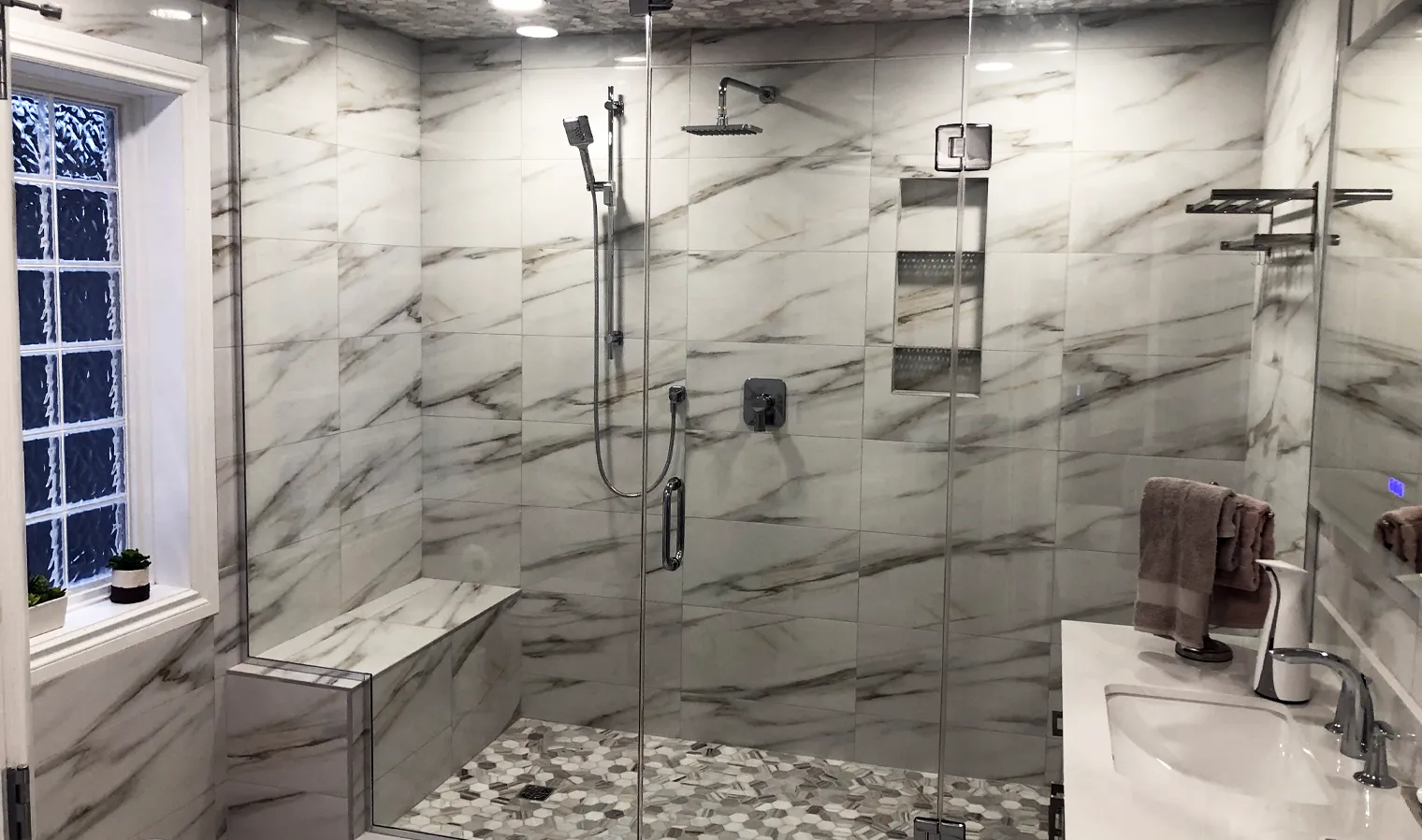
Large-format tiles, such as 12×24 or 24×24, can minimize grout lines and help the room feel more spacious. Checkerboard or basketweave patterns can add character.
Use them sparingly on feature walls or in a shower niche. Use full-height tiling on the shower surround to maximize moisture resistance and a cohesive look.
Classic grid/stacked layout for a clean, bright look
Layout and pattern ideas include using a classic grid or stacked layout for a clean, bright look. A grid layout with uniform tile squares creates a seamless, airy feel that minimizes visual clutter in smaller bathrooms.
Running one unbroken row of tile around the room helps walls look longer, and the space feels larger. For more depth, pair white or pale tiles with light gray or taupe grout. This keeps the space bright and defines the lines.
Other ideas to brighten below-grade spaces include large-format tiles to reduce grout lines. Use minimal grout colour contrast to keep surfaces looking continuous. Install a reflective or polished finish on select surfaces.
Using waterproof backer boards and proper sealing helps ensure durability in damp areas. Bright lighting and reflective mirrors also make the space feel larger.

Subways in horizontal vs. vertical runs.
Horizontal runs:
This works well in narrow basements or rooms with tall ceilings. Use a longer, uninterrupted run for a more expansive feel.
Vertical runs:
Vertical lines draw the gaze upward, helping the ceiling seem taller, and the space feel less boxy. This approach works especially well in rooms with low ceilings, and it can also emphasize a tall shower niche.
Practical tips:
Use a brick-japanned or running bond pattern for a traditional look. Consider a snug, contrasting grout to highlight the subways, or a near-matching grout for a seamless appearance.
For damp areas, use proper spacing and sealing. Consider bevelled or offset joints to add texture without trapping grime.
Herringbone or chevron for a focal wall or shower niche
Consider a cohesive tile plan that extends from the floor to a focal wall or niche to create a sense of continuity and height. For a striking accent, use a herringbone or chevron pattern on a focal wall.
You can also use it inside a shower niche as it draws the eye and adds architectural interest.
Diagonal layouts to visually expand small spaces
Diagonal layouts set tiles at a 45-degree angle. This can make small spaces look bigger, and it draws the eye outward and softens sharp corners.
This makes the bathroom feel larger and more dynamic. Pair diagonal floors with a vertical tile or a lighter wall tile to maximize brightness and perceived space.
Shower/bathtub surround considerations
Shower and bathtub surround considerations center on proper waterproofing and durable, mould-resistant materials.
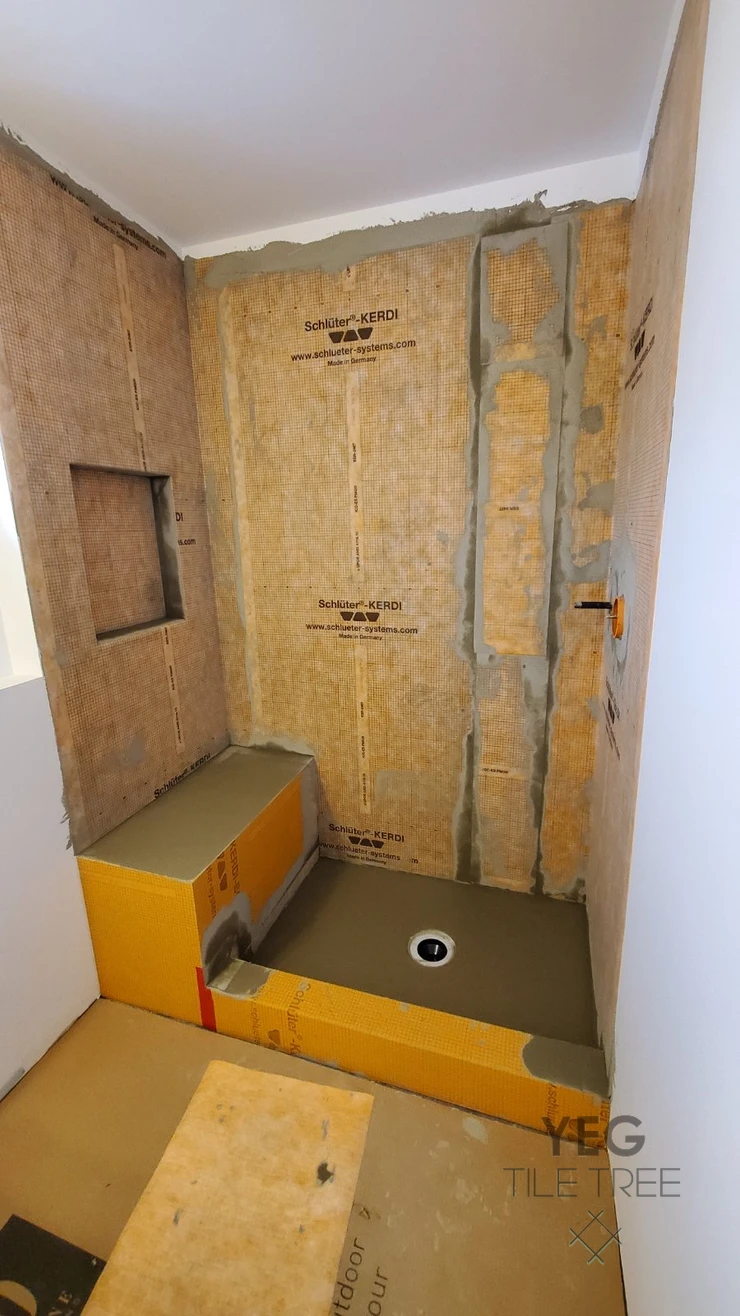
Install a waterproof membrane over cement board, with a cementitious or epoxy grout that resists moisture and staining.
Consider frameless glass doors to keep sightlines open. Add built-in niches and a shower bench with fully sealed edges. Use tile formats and textures with slip-resistant surfaces for floors, and trim edges with bullnose or pencil mouldings for a clean finish.
Lighting and colour strategy
Layered lighting
Use ambient lighting with recessed ceiling fixtures or a flush-mount fixture to provide even overall illumination. Add task lighting around the vanity to ensure a clear, shadow-free surface for grooming. For example, use an LED strip lighting under cabinetry or wall sconces at mirror height.
Include accent lighting to highlight tile patterns or features with small, adjustable spotlights or LED tape. Pair this layered lighting with a cohesive colour palette. Add reflective surfaces to boost brightness.
These choices can also make the basement bathroom feel larger.
Daylight-mimicking LED options suitable for basements
To make a basement bathroom feel open and welcoming, pair light, reflective tile choices with a bright lighting plan. Opt for tile in pale grays, warm whites, or soft pastels and consider glossy or matte finishes that reflect more light. Choose options that are easy to clean in damp areas.
A monochrome or high-contrast grout choice can add depth without darkening the room. Light grout keeps the space airy. Dark grout can define patterns or borders for visual interest.
For lighting and colour strategy, layer ambient, task, and accent lighting. Use fixtures with a high Colour Rendering Index (CRI). Choose a colour temperature of 3000 to 4000 Kelvin to mimic natural daylight. Add dimmable controls to adjust mood and function for baths, showers, and mirrors.

How tile colour and finish interact with lighting
Tile colour and surface finish have a major impact on how light performs in a basement bathroom. Paler tile shades, such as white, cream, light grey, and gentle pastels, reflect more light into the space. This helps the room feel larger and more open. Glossy finishes further enhance brightness by bouncing light around.
If you prefer colour, choose pale, cool-toned hues that recede visually and make the space feel open. Or, use larger tiles to reduce grout lines and create a smooth, continuous surface.
The way tile colour and finish interact with lighting depends on both the light source and the room’s geometry. Cool or daylight-mimicking bulbs will bring out the cool undertones in light-colored tiles, making the space feel fresh and clean.
Warmer bulbs paired with cooler tile shades can create contrast that reads as cozy rather than stark. Matching grout to tile, or choosing slightly lighter grout, can affect overall brightness. Lighter grout often makes the tile look more reflective.
Finally, consider texture. Subtle textures or matte finishes can reduce glare from artificial light. They still accept and spread illumination well.
Mirror placement and reflective surfaces to amplify light
Position mirrors opposite or near light sources and windows, as it helps bounce light around the room.
Choose oversized or frameless mirrors to boost brightness. Incorporate reflective surfaces beyond mirrors, like glossy tile or metallic fixtures, to improve the reflectiveness of light.
If windows are scarce, a light tube can inject daylight, while bright, reflective surfaces keep the space feeling open and welcoming.

Maintenance, sealing, and longevity
Sealing requirements for grout and stone, where applicable
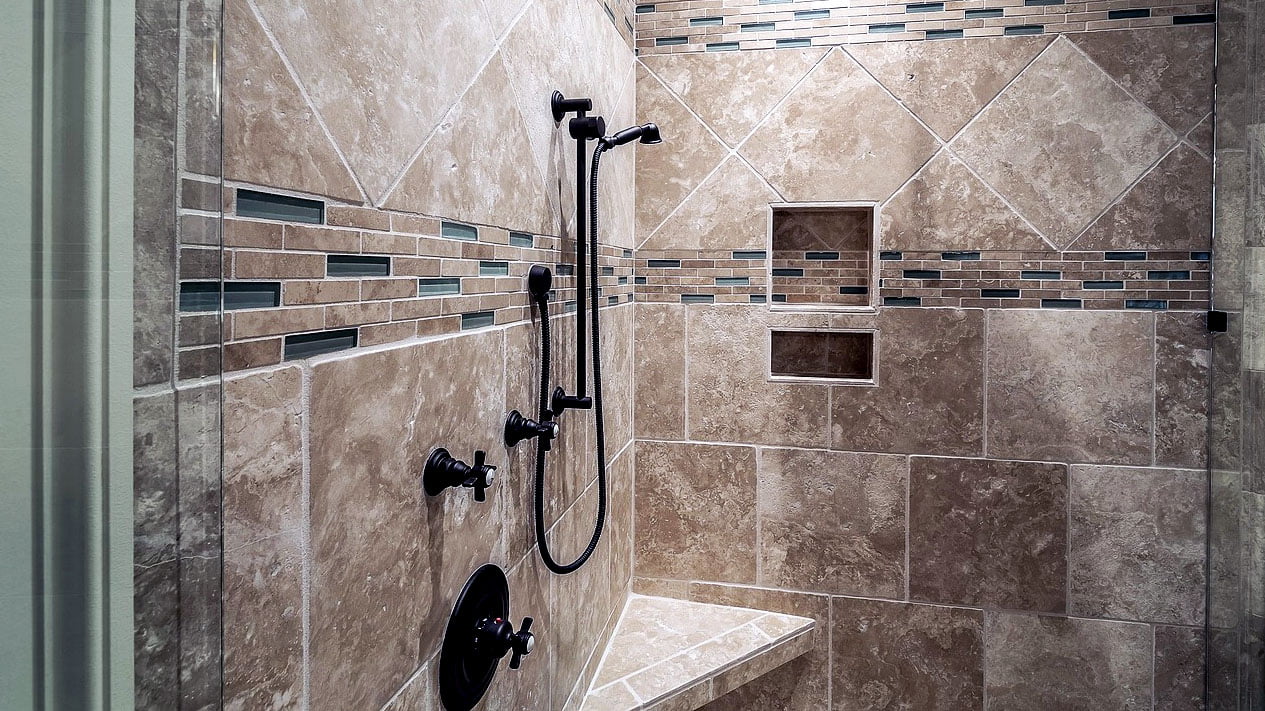
Use a good penetrating sealer on grout and natural stone, and epoxy grout in wet areas. It resists stains and lasts longer.
Reapply sealers as the product guide says. Do this every 1–3 years for grout and for stone, reapply every few years. The timing depends on wear and moisture exposure.
Choosing low-maintenance finishes
To maximize longevity, choose moisture-resistant tile and grout that are easy to clean. Plan proper sealing and ventilation to prevent stains and mould.
Regular maintenance should include a quick wipe-down of surfaces, fixing seal or grout cracks fast, and resealing porous tiles at times. This helps preserve colour and sheen.
For low-maintenance finishes, choose large tiles with few grout lines. Use prefabricated shower panels. Pick sealant-friendly or epoxy grout to resist stains and mildew.
Humidity control basics in basements
Basement humidity control basics include installing a vapour barrier during construction. Choose a properly sized, low-noise bathroom exhaust fan and make sure it vents directly to the outside.
A dehumidifier helps stabilize humidity levels—aim for roughly 30–50% relative humidity. Make sure the area has proper ventilation. Install a timer or a humidity-sensing switch, and it can run the fan when moisture rises.
Regularly check for leaks and fix any cracks or gaps in walls, seals, or the shower enclosure quickly. This helps maintain a bright, durable basement bathroom for years.
Project planning
Effective project planning starts with a realistic timeline. It should account for permits, material lead times, and contractor availability. Add a buffer for unexpected delays.
Budgets should include tile and materials, waterproofing, plumbing, and electrical work. Include demolition, labour, and a contingency, usually 10–20%. Also, remember to include finishing touches, such as fixtures and paint, as part of your total.
Projects typically start with design decisions and permits, and then demolition and site protection. Next, complete rough-in tasks, such as plumbing and electrical work.
Add sheathing or improve insulation if needed. Do waterproofing before framing the bathroom enclosure.
After that, allow the tile, grout, and waterproofing sufficient time to fully cure. Then fit fixtures, cabinets or a vanity, and complete the final plumbing hookups. Next, install lighting and ventilation, then apply paint. Conclude with a detailed, thorough clean-up.
Planning for trades: coordinate plumbers, electricians, and tile installers so work flows efficiently, minimizes downtime, and avoids rework.

Typical basement bathroom remodel phases.
- Phase 1: Discovery and design, including goals, measurements, site assessment, and select finishes.
- Phase 2: Permitting and cost estimation to secure approvals and align the budget.
- Phase 3: Demolition and site protection to prepare for new work.
- Phase 4: Rough-in for plumbing and electrical, plus any necessary insulation or framing adjustments.
- Phase 5: Waterproofing and moisture management, including membrane installation and vapour barriers.
- Phase 6: Drywall, mudding, and ceiling work to prepare for finish materials.
- Phase 7: Tile installation and floor levelling, with backerboard and waterproofing in wet zones.
- Phase 8: Fixture setup, vanity, cabinetry, plumbing hookups, and lighting arrangement.
- Phase 9: Finishes, paint, and trim, plus venting and final systems testing.
- Phase 10: Punch list, final inspections, and deep clean to complete the remodel.
Budget breakdown
Tiles, labour, Demolition and prep, waterproofing, and fixtures are all part of your budget. Allocate cost across major categories to guide choices and avoid overrun. If you choose to hire a contractor, they can help you with an estimate on what your budget will look like with their services.
If you are creating your own budget, use this list for what to consider pricing out.
- Tiles: choose porcelain or ceramic tiles with good slip resistance and low water absorption. Consider per-square-foot costs, plus any special patterns or accents.
- Labour: includes surface preparation, floor and wall tiling, edging, and cleanup. Labour rates vary by region and tile complexity.
- Prep: substrate repair, levelling, patching, and removal of existing materials, plus curing time for any patch compounds.
- Waterproofing includes watertight membranes or liquid-applied barriers. It also includes sealed penetrations around fixtures. It may include drain preparation if needed. All are essential for below-grade bathrooms.
- Fixtures: the vanity, toilet, shower or bathtub, doors, and hardware. Plan the layout carefully. Make sure the ventilation is strong for the bathroom. Add lighting that complements the tile selections.
Plan for contingencies by setting aside part of the budget for unexpected needs. These may include extra waterproofing or repairs after moisture testing.

Time buffers for Edmonton winter scheduling
Schedule time buffers for Edmonton winters. The cold can create delays and problems for any construction project. Grouts, sealants, and even labour can all suffer if the temperature is too low. Some materials are moisture-controlled and need a proper amount of humidity.
Allow extra time for long cold snaps, shipping delays, and indoor material acclimation to keep the project on track. Build in additional time for HVAC operation and moisture management during installation.
With Edmonton winters, houses can expand and contract depending on the temperature. Although you can schedule work in winter, you should do renovations in the late spring or early fall. This is to keep your project on time and within the budget.
Contingencies and common overages
Contingencies for any renovation are essential. An average contingency budget is about 10-20% extra. This allows for any accidents or extras that may cost more than you originally planned for.
Budget for small design changes, like switching tile sizes or grout colours after reviewing samples. Set aside 10–20% of the total budget as a contingency. This helps cover unexpected issues and adjustments without delaying the project.
Some common overages include water leaks found during demolition. They may also include upgrading or moving existing plumbing. Cold basements may also need extra vapour barriers or insulation. Material delays are frequent, especially for specialty tiles or patterns, so factor in lead times and potential substitutes.
Working with a local expert
Navigating Edmonton’s climate takes a contractor who knows Northern Alberta’s freeze-thaw cycles and soil conditions.
When choosing a professional, pick someone with proven skill in moisture control and quality below-grade waterproofing systems.
A local expert knows city building codes. They can give a realistic timeline that considers local supplies and seasonal changes.
Taking time to check references and review local portfolios helps you choose someone to do your renovation. They understand the structural details of homes in your area.
Questions to ask contractors
Before signing a contract, homeowners should have a detailed technical talk. This helps ensure their bathroom investment lasts.
Begin by asking which waterproofing membrane system they will use behind the tile. Ask how they plan to seal the joint between the floor and the wall.
Ask how they plan to prepare the subfloor. Also, ask if they will use self-levelling underlayment or an uncoupling membrane. These can protect the tile from foundation movement or moisture in the concrete.
Finally, always ask for a written breakdown of the warranty coverage. Confirm it includes both labour and materials. Additionally, confirm whether you can transfer it later if you sell your house.

Showroom visit benefits and sample pulls
Visiting a professional tile showroom offers a hands-on experience that digital photos cannot match. You can feel the texture and weight of different materials. Seeing full-sized slabs and neat displays helps you picture how grout colours and tile patterns work together.
One of the biggest benefits of visiting a showroom is that you can request tile samples. You’re able to take them back home to check how they appear under your basement lighting. This “try-before-you-buy” approach helps the colours match your cabinets and paint. It also avoids costly surprises when installation starts.
How To Get Started With Your Next Project
Starting a renovation is simple when you follow a clear plan that fits your home’s unique needs. The journey begins with a professional design consultation, where experts help turn your vision into a practical plan. It also addresses the technical needs of a below-grade space.
Following this, you will move into the tile selection phase. You will explore a curated range of materials. They balance modern style with long-term durability.
A visit to an Edmonton showroom offers a hands-on experience. You can view full-size displays and pull physical samples. This lets you observe how they appear under your basement’s specific lighting conditions.
Once you choose your favourites, our team takes exact on-site measurements for an accurate quote and fast ordering. This leads to a final construction schedule that respects your time and home.