
Which Tile Is Right For Your Shower Renovation?
Large format tiles and subway tiles each offer a distinct look and practical benefits for a shower reno. Choosing between them matters more than you might think. Large format tiles offer a modern, seamless feel and subway tiles offer a classic, timeless vibe.
You’ll learn how tile size affects grout lines, installation steps, maintenance, and how spacious your shower feels. By the end of this blog, you’ll have a clear takeaway of the differences and similarities between large-format tile and subway tile.
Quick definitions
What counts as a large-format tile?
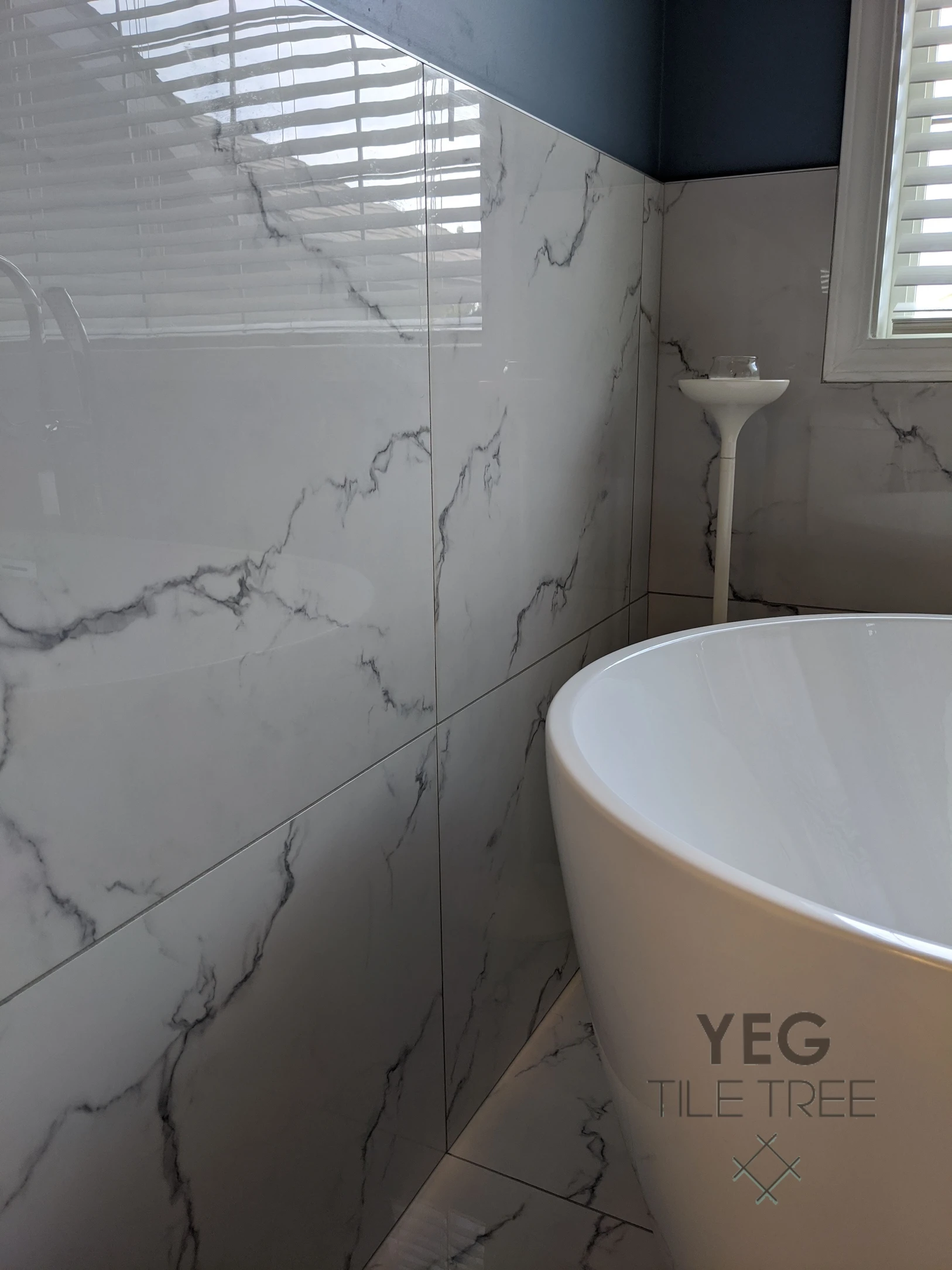
Large-format tiles have one side larger than 12 inches, but are commonly available in sizes such as 12×24, 24×24, 30×60, and 48×96. People make them from porcelain, ceramic, natural stone, and sometimes glass. People value them for fewer grout lines and a seamless look.
What counts as subway tile?
Subway tile is a classic rectangular tile inspired by New York City subway stations. It frequently measures about 3×6 inches.
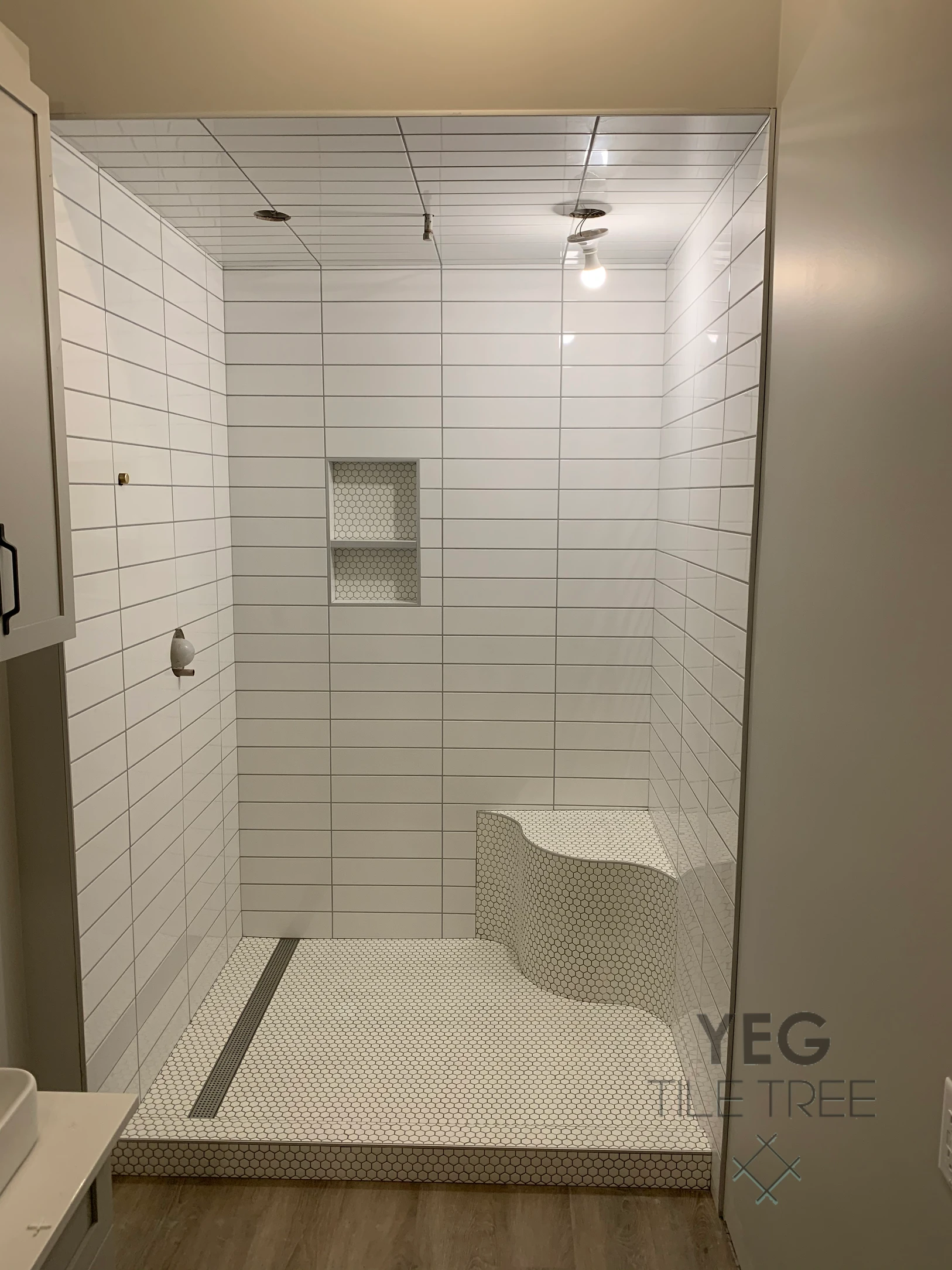
You may also come across sizes such as 4×8, 2×6, and even longer planks. People often install it in a running bond or stacked pattern. This delivers a classic, polished appearance.
Common installation methods for showers
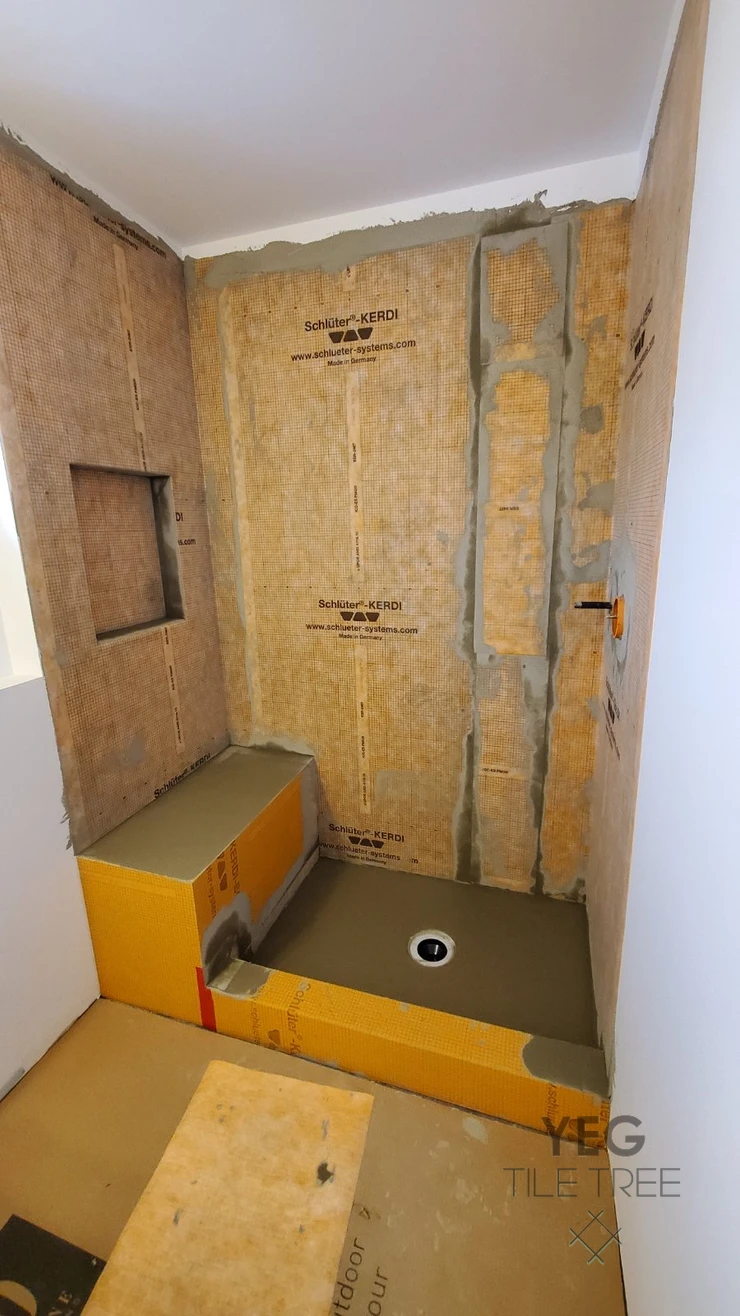
Common shower installation approaches involve sealing the shower pan and surrounding walls using a waterproof membrane.
Fasten the tiles firmly to a solid, stable base, such as cement backer board or an approved backing system. Workers set most tiles with thin-set mortar. Use epoxy grout or cement-based grout for grouting.
Large format tiles may need back-buttering and spacers. This helps prevent lippage and keeps the surface flat.
Subway tiles often use standard spacers. You can bevel them, offset them, or stack them. This depends on the chosen pattern and edge profile.


Comparison in Tile
Aesthetics and style
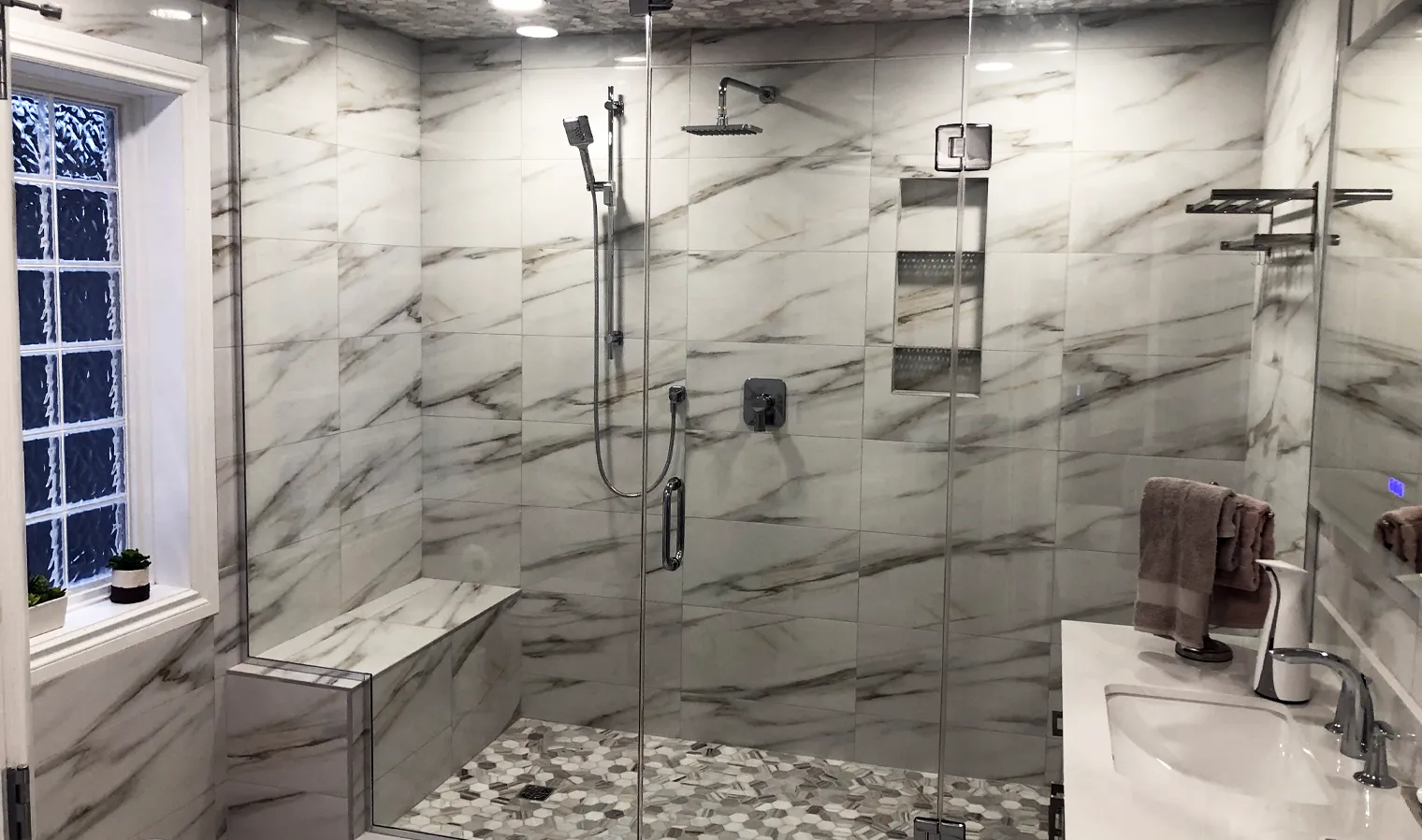
Large format tiles offer a modern, seamless look. They can make a shower feel more open and cohesive. Additionally, this tile has fewer grout lines. It creates a clean, modern look.
Subway tiles add an enduring, traditional style that always stays in fashion. They are versatile and suit many patterns. Choices include herringbone, stacked layouts, and running bond. These patterns add visual interest while keeping a clean look.
Space and layout considerations
When planning space and layout, tile size dramatically affects grout lines, joints, and wall texture.
Large-format tiles minimize grout lines, creating a cleaner, more streamlined look with fewer seams to maintain. Subway tiles leave more joints. These joints add visual texture and a classic rhythm to the shower.
In small bathrooms, large tiles can make the space feel bigger. They reduce wall breaks and visual interruptions. Subway tiles create a more traditional, tile-by-tile look. They also allow more patterns and inset details.
In larger showers, large-format tiles create a smooth, unbroken look that feels more spacious. Subway tiles offer many pattern options and add more wall texture and detail.
Large-format tiles suit simple, modern layouts and few patterns for a smooth, seamless look. Subway tiles support timeless patterns like herringbone, brick, or vertical stacks. These designs add motion and make engaging focal points along the walls.
Installation and complexity
Large-format tiles and subway tiles each have their own installation needs. These needs can affect a shower remodel.
Substrate prep and waterproofing
Large-format tiles need a flat, even surface to prevent lippage. They may also need back-buttering or a thicker mortar bed. Subway tiles forgive small surface flaws, but still need solid waterproofing. They also need the right slope for proper drainage.

Cutting, waste, and time trade-offs also vary
Large-format tiles frequently cut down the total number of pieces needed and grout lines. This can reduce cutting and grouting time. But they may need more precise measuring and careful dry-fitting.
They may also require specialized tools. Subway tiles are smaller. They can be quicker to cut and fit in tight spaces.
They can also fit irregular spaces more easily. But they create more pieces and grout lines. This can increase labour and waste.
The overall installation complexity hinges on substrate flatness, tile size, and the chosen layout pattern.
Skill level and learning curve differ for DIY vs. pro installation
A skilled DIYer can handle large-format tiles with the right prep and tools. Subway tile is often easier for beginners because cutting and alignment are simpler. Both still need careful waterproofing, proper anchoring, and consistent pattern work.
In short, choose large format for a sleek look with minimal grout, but it needs a precise substrate. Choose subway tile for more flexibility and an easier learning curve. Plan for substrate preparation, waterproofing, and the right tool investments.
Maintenance and durability
When choosing large-format or subway tiles for your shower remodel, consider long-term maintenance.
Also think about durability and how well the tiles will hold up over time.
Grout maintenance varies
Grout colour choices can hide or show dirt and mould. Darker grout or epoxy grout can make cleaning easier and less frequent. Lighter cement-based grout may need more regular scrubbing.
Cleaning routines should match the grout type and colour. Use routine sealing or periodic refreshers to prevent stains and mildew in damp showers.
porcelain or ceramic tiles matter for moisture resistance
Porcelain tiles are denser and usually more water-resistant. This makes them a sturdier choice for showers. Ceramic tiles can still work, but they often need better sealing. They also need more careful maintenance in wet areas.
Tile size influences cleaning schedules and mould risk
Larger format tiles have fewer grout joints. This can cut cleaning time and reduce grout maintenance. But when grout needs attention, it covers larger areas. Subway tiles create more grout lines.
These lines require routine cleaning to help stop mould and mildew from accumulating.
Waterproofing and performance
Large-format tiles and classic subway tiles are both great for shower remodels. Neither option replaces full waterproofing or a properly installed membrane. Both tile types require detailed prep. That includes a flat base, full thinset coverage, and proper sealants to stop moisture from getting in.
No matter the tile size, durable results depend on a watertight substrate. Use a suitable waterproofing system that runs up the walls. It should also extend behind any niches or benches.
Expansion joints and movement needs matter for any tile choice. Large-format tiles are often more prone to experiencing lippage. They may need tighter substrate tolerances.
Subway tiles frequently depend on uniform, consistent grout joints. This helps accommodate movement.
In both cases, adding expansion joints at transitions, corners, and around shower fixtures reduces cracking and water leaks. Thorough planning of movement joints, paired with compatible grout and sealant, supports lasting waterproof protection.
Cost and value
When weighing value, large-format tiles often cost more per tile. But they can lower total costs because they use less grout and fewer pieces.
Subway tile is usually cheaper per tile and easy to find, but it needs more tiles. It also has more grout lines. Over time, this can raise both material and labour costs. Overall value depends on the shower size, design goals, and long-term maintenance.
Material costs by size and type
Large-format tiles (such as 12×24 or 24×48) typically cost more per square foot than subway tiles.
This is more likely with premium finishes or porcelain and stone looks. Subway tile (3×6 or 3×12) is often the most affordable option. You can also easily find it across a wide range of prices.
The final material cost also depends on the tile type (ceramic, porcelain, or natural stone). It also depends on the edge profile or special finishes you choose.

Labour costs and installation time
Installation time for large-format tiles is often faster per square foot because there are fewer tiles. You also need less grout. However, handling and cutting can be more challenging. This can increase labour for complex patterns or tight shower niches.
Subway tile is simple to lay in straight runs or classic patterns. But it needs more grout lines and tile cuts. This can raise labour costs and take more time.
Long-term maintenance costs
Grout upkeep is often higher with subway tile because it has more grout joints. These joints can stain or crack over time. They may need re-grouting or sealing now and then. This is especially true with non-sanded grout.
Large-format tiles have fewer joints, which generally means less grout to clean and reseal, but the grout that remains still needs care.
Porcelain and epoxy grout can help lower upkeep across both formats. But natural stone tiles usually need more sealing and ongoing care.

Installation details and trim options
Large format tiles and subway tiles each have clear benefits for a shower reno. The best choice depends on your space, style, and maintenance needs.
For large format, bullnose or pencil-edge trims give clean, minimal edges. Ladder-edge or bevelled trims can introduce gentle, subtle definition.
For subway tiles, you can use dark or contrasting border trims, offset chipping, or rounded edges to soften corners.
Transitions between surfaces matter for a cohesive design. Large format tiles often meet glass enclosures with minimal grout lines. This requires careful alignment with glass panels and shower doors. Subway tiles allow more visible transitions with a framed edge or metal trim.
Stone accents or slabs with large-format tile create a high-end, solid look. They need proper sealing and movement joints. Subway tiles, on the other hand, add timeless texture and brighter, cooler reflections. They are easy to cut, and you can replace single tiles if needed.
Additionally, Metal details, such as strip channels, corner trims, or ladder rails, can coordinate with subway tile for a timeless, classic look.

Design ideas and pairings
Large format:
Pair seamless wall panels with minimal grout for a bold, modern look. Select finishes that replicate natural stone or use rich solid hues for a premium look.
Subway tile:
Use classic patterns on one wall as a feature. Or add visual interest with bold, contrasting grout. It will contrast clearly with white or light-colored tiles.
Mixing both:
Use subway tile for accents or a feature wall. Cover main walls with large-format panels to balance texture and simplicity.
Colour and finish ideas:
Matte finishes feel calm and modern. Glossy finishes reflect light and look brighter. Choose neutral tones for a timeless look. Choose bold hues for a dramatic, modern shower.

Practical considerations for your space
In smaller showers, large tiles can reduce grout lines and make the space feel bigger. You will need precise cuts for niches and fixtures.
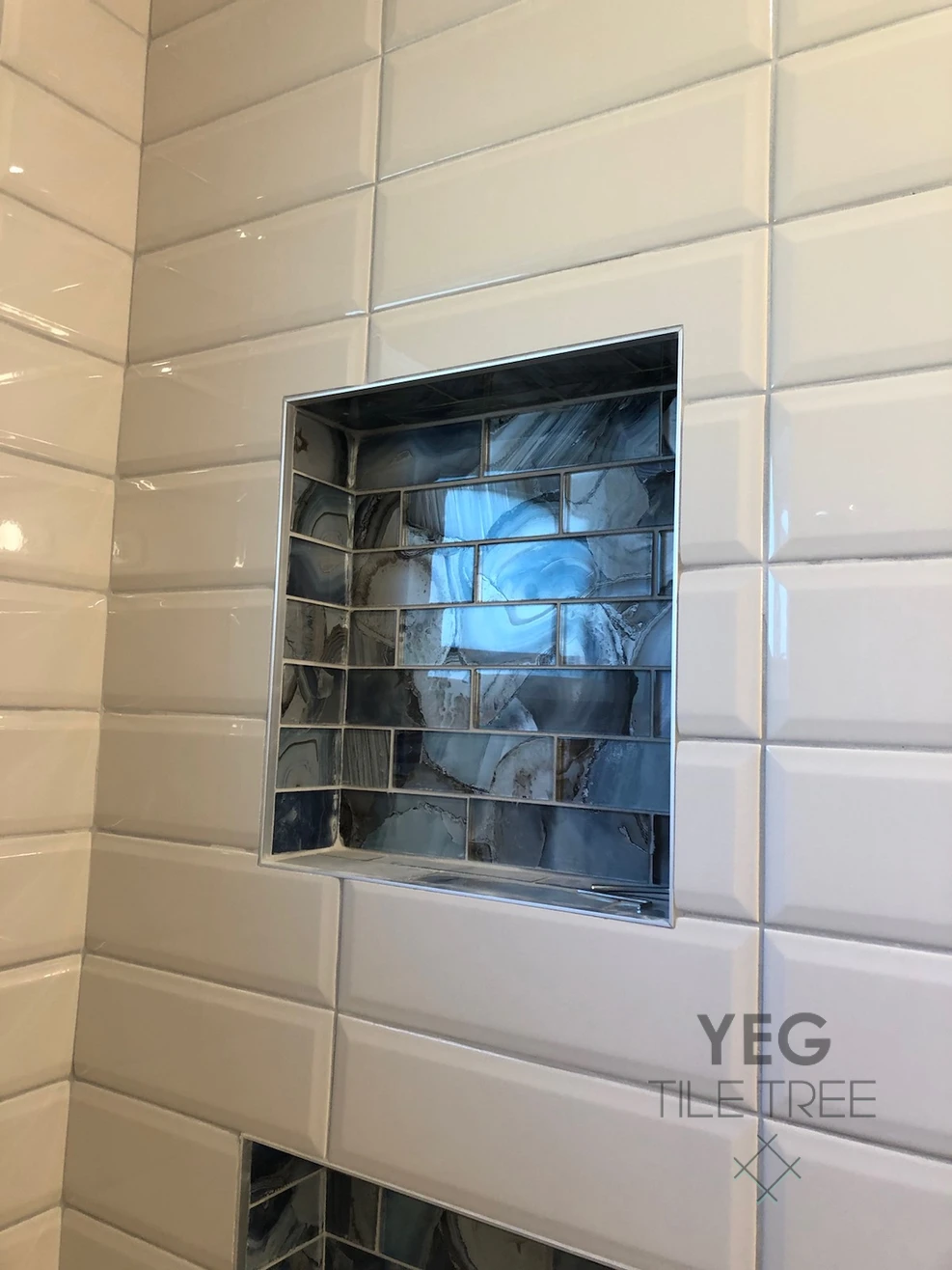
Subway tiles provide predictable sizing and can be easier to customize around shower niches and shelves.
Consider using larger tiles on the main walls and smaller or trimmed pieces around corners and niches to avoid awkward cuts.
Cabinetry and hardware coordination
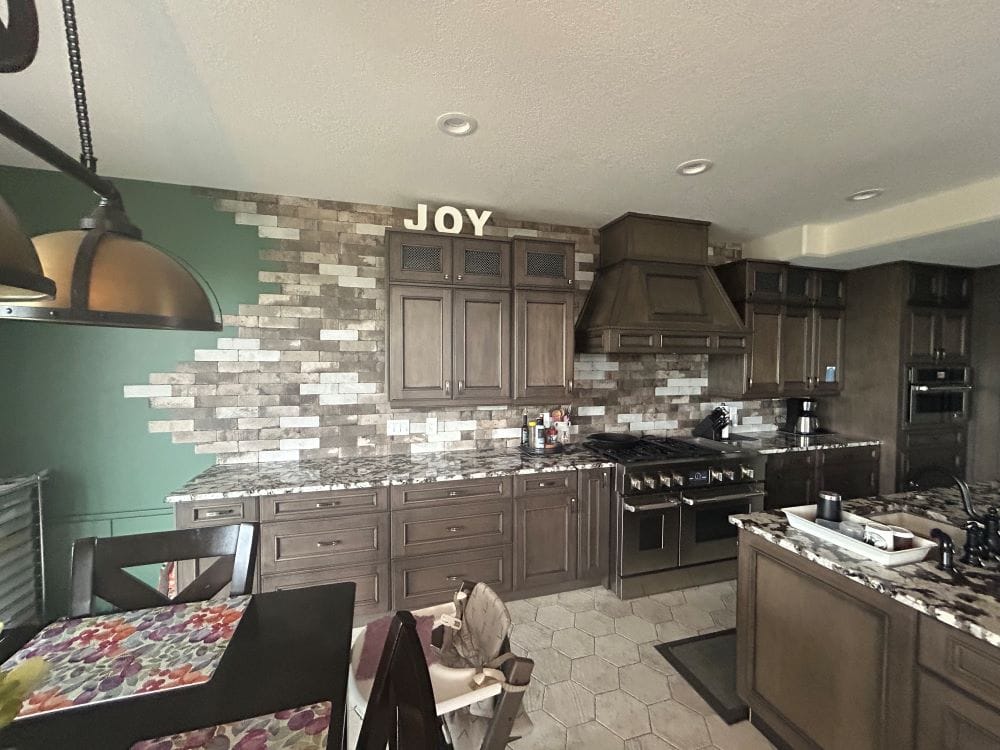
The style of cabinetry and hardware should complement the tile scale. Large format tiles pair well with sleek, minimalist vanities and modern fixtures. Subway tiles suit transitional or traditional cabinets with detailed hardware. Coordinate grout colour and finish with faucet finishes and drawer pulls to maintain a cohesive look.
Glass enclosure and door choices
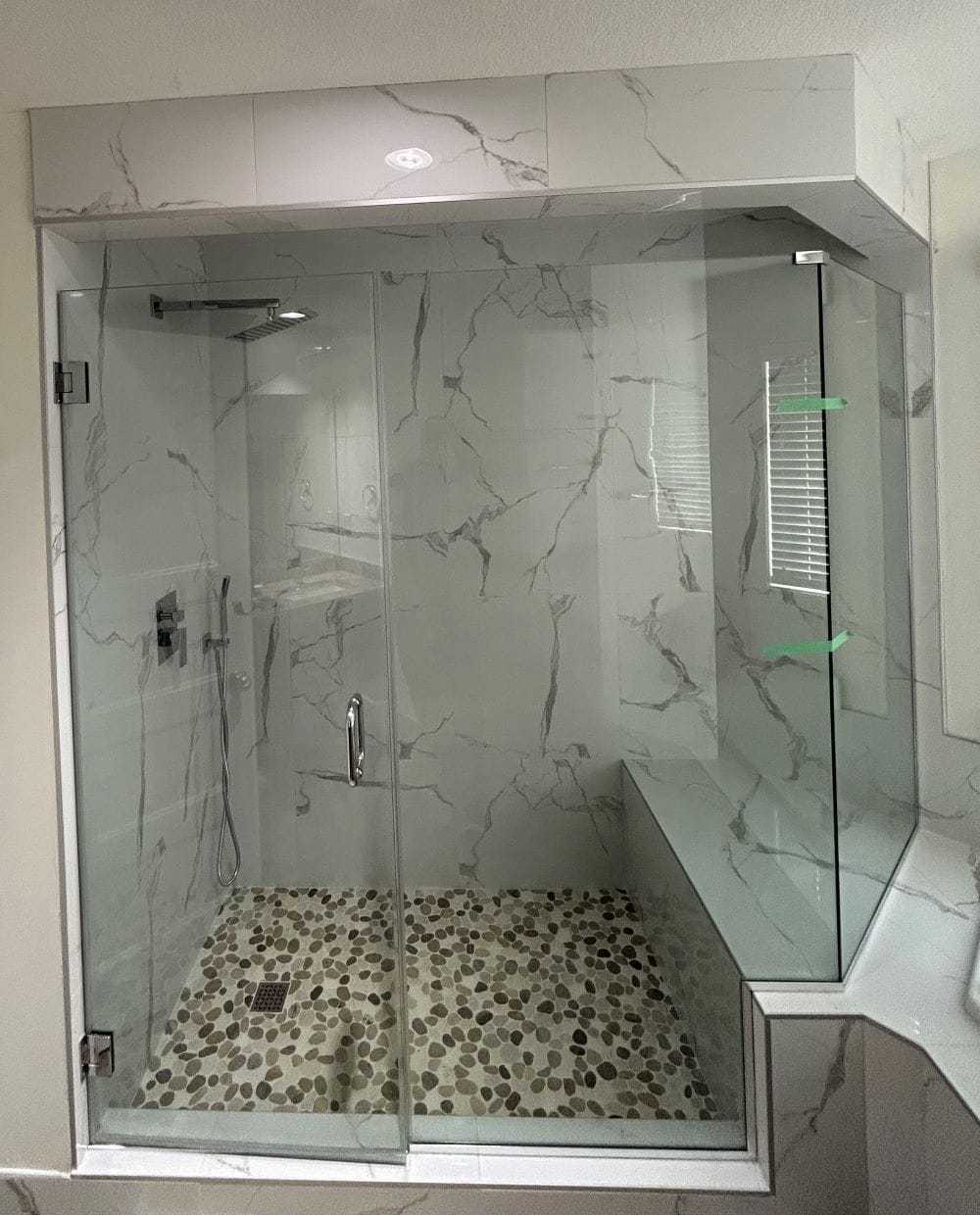
A frameless glass enclosure works well with large-format tiles, emphasizing clean lines and a seamless surface. Subway tiles can look great behind a glass door.
Consider a tile pattern that matches the door hardware. You can also add a slim accent strip. This adds interest without overwhelming the glass.
Heating and anti-slip considerations
Regardless of tile choice, select a tile with a slip-resistant surface for shower floors. For radiant heating, large tiles hold heat well and have fewer grout joints. Make sure the floor heats evenly to prevent cold spots. If you use subway tiles on the floor, note that this is not a typical full-floor layout.
Make sure the pattern and grout lines do not show uneven areas. Consider textured or small-format floor tile for better traction.
A good layout should match the cabinets, enclosure, and safety features. This will help you create a shower renovation that looks cohesive and lasts
Decision checklist for your shower reno
- Goals: clarify your aims for look, maintenance, and budget to guide tile selection.
- Assess the Space: check shower size, light, and layout. Decide if large sheets or small tiles fit best. See how grout lines will look.
- Water exposure and DIY vs. pro fit: weigh moisture risk, seam issues, and if you’ll hire a pro.
- Budget ranges and timeline: costs for materials, labour, and any tile or substrate prep, plus scheduling constraints.
- Quick verdicts: large format works best in bigger showers. It needs strong light and suits a sleek, minimal look. Subway tile fits smaller spaces. It also works with high-contrast or classic styles. It’s also better suited for DIY projects.

Budgeting and timeline
Budget:
Large format tile usually costs $6 to $12 per sq ft for materials. Installation often costs $6 to $12 per sq ft. Prices depend on tile thickness, prep work, and the pattern.
Subway tile usually costs $2 to $6 per sq ft for materials. Installation often costs $6 to $12 per sq ft. Prices vary by grout colour, layout, and cutting needs.
In practice, total installed costs can start around $10–$20 per sq ft for subway tile.
For large format tile, costs can start around $12–$24 per sq ft.
Premium materials or complex layouts can raise the total cost.
Timeline
Subway tile projects often take about 1 to 2 weeks from prep to grout cure, depending on wall condition and shower size.
Large format tile projects can take a similar or slightly longer time, about 1.5 to 3 weeks. This is because large panels often require careful levelling and accurate cutting. Advanced waterproofing systems may also need longer curing times.
Watch for specialty trims (corner pieces, niches, Schluter profiles) that can add to material and labour time.
Waterproofing membranes and liquid barriers are important. They can raise total costs and extend prep time from floor to ceiling.
Tile pattern repetition or intricate layout designs can raise material waste, labour time, and special cuts, increasing costs. Examples include running large sheets across several walls, creating vertical or diagonal layouts, or matching grout lines at fixtures.
For a modern, seamless look, large format may be worth it. However, a higher material and cutting cost will apply.
For a classic, low-cost tile that’s easy to cut and install, subway tile is a practical choice.
Plan for waterproofing as a non-negotiable, and factor trims, pattern choices, and preparation into your budget and schedule.

How to choose and next steps
Start by checking your shower size and layout. Large format tiles can make small spaces feel bigger. They may need careful planning for cuts and waterproofing.
Think about maintenance preferences. Large-format tiles have fewer grout lines, so there is less grout to clean.
Subway tiles have more visible grout lines. You can style them with different grout colours.
Consider the overall design language you want. Use large format for a sleek and contemporary look, or subway tile for a classic and adaptable look.
To move forward, consult a contractor or designer. They can check the substrate, waterproofing, and layout. They can share examples. They can also offer a practical installation plan and clear timeline tailored to your space.